
Fergus Suter: The Story of Football's First Professional
A Glasgow stonemason crossed the border in 1878 and changed football forever. The amateur era ended, the passing game began.
Does Anyone Know the Name of the First Professional Footballer?
When did modern football become a business? Was it the Premier League's founding in 1992? The transfer reforms of the 1980s? The Bosman ruling?
The answer is much older. 1878. A Scottish stonemason came to England, secretly, for a wage. His name was Fergus Suter. He was the first professional in modern football.
The Glasgow Stonemason
Suter was born in Glasgow, Scotland, in 1857. His trade was stonemason. He cut stone for a living. In his spare time he played for Partick FC. And the Scots, in those years, were playing the smartest football the world had seen.
In England, the game was still dribbling football, solo runs, tricks, long shots. Passing was not part of it. The Scots had learned the opposite: short passes, positional rotation, collective organisation. They called it combination play.
So Suter was more than a player. He was the carrier of an idea.
1878: The Stonemason Crosses the Border
Darwen FC in north-west England wanted to copy this new style. Suter and his teammate Jimmy Love came to Darwen. The official reason: stonemasonry work. The reality: football, for a wage.
In that era, football was an amateur sport. Professionalism was banned. A paid player was a scandal. But Darwen's employers looked the other way, winning mattered more.
So a stonemason crossed a border, looking for all the world like an ordinary migrant worker. In his luggage, no hammer. Just football.

Darwen's Historic Match (1879)
Darwen FC drew Old Etonians in the 1879 FA Cup quarter-final. Old Etonians were drawn from the English social elite, alumni of Eton College, sons of aristocratic families. On one side, working-class players. On the other, the children of lords and barons.
The aristocrats led 5-1. The match seemed over. Then Suter's passing game clicked. Darwen came back. 5-5. The replay ended 2-2. A third match went to Old Etonians, 6-2.
Etonians won. But something had cracked in the world of football: the working class, with passing football, could stop the aristocracy. That was a social message.
1880: Blackburn Rovers
In 1880, Suter moved to a bigger club, Blackburn Rovers. Again, money was involved, and disputed. The FA still did not recognise professionalism. But the clubs had already moved on.
Suter played for Blackburn as a halfback, the modern equivalent of defensive midfielder. Distributor, ball-winner, the team's central pivot.
Blackburn invested in Suter's technique. The results arrived within a few years.
FA Cup Hat-Trick: 1884–86
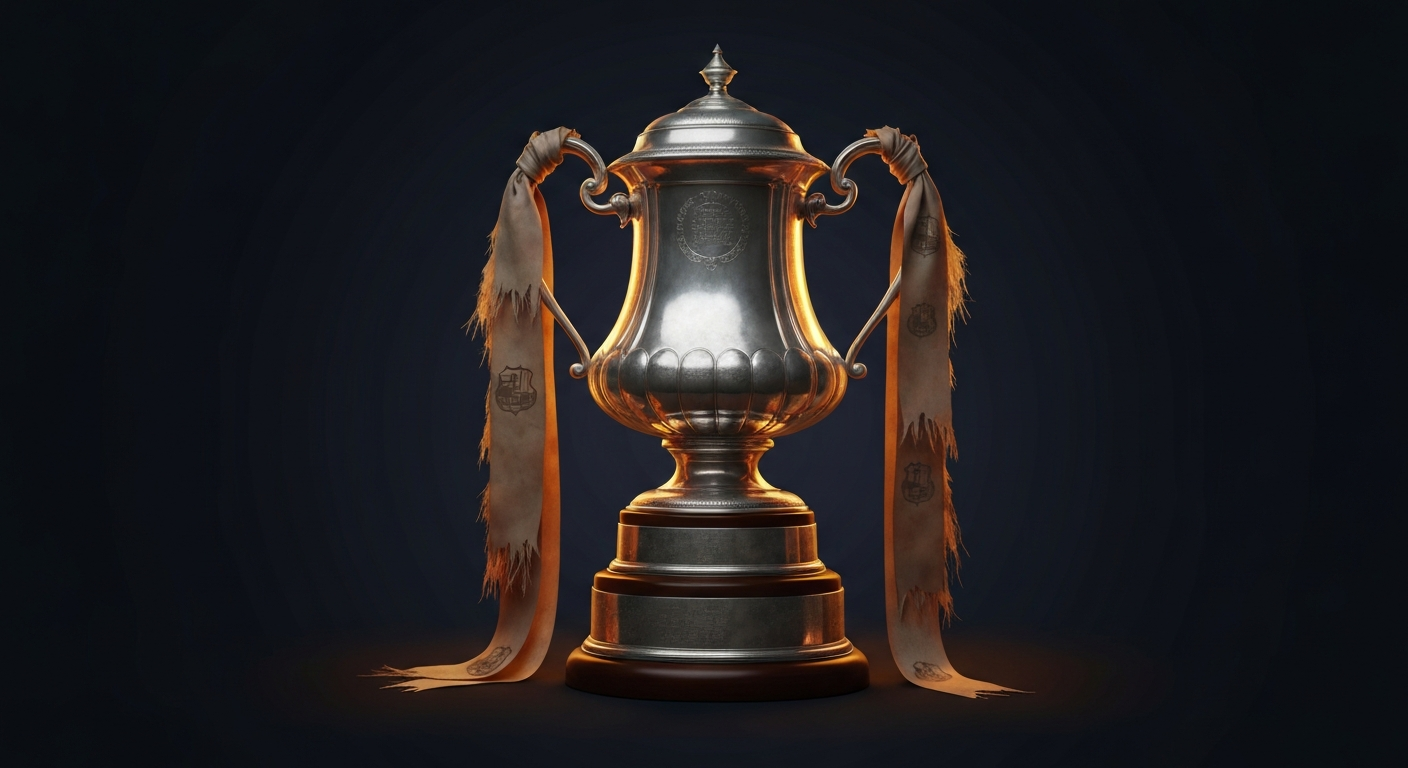
Blackburn Rovers won the FA Cup three seasons in a row. 1884, 1885, 1886. Suter started every final.
That record stood alone for 137 years. Only Wanderers (1876-78) matched it. No modern club has won the Cup three consecutive times.
So a stonemason's three back-to-back cups, the first great achievement certificate of modern professionalism.
1885: Professionalism Becomes Legal
The pressure from the clubs was unstoppable. In 1885, the Football Association legalised professional football. Suter had been doing it for seven years.
He never admitted it publicly. No contract survives. But historians and football researchers, led by Peter Cullen, have assembled the evidence: payments, the implausibility of a stonemason travelling to Darwen for work alone, the timing.
Suter retired in 1889. He died in Blackburn in 1916. For a long time his name was forgotten.
What He Left Behind
The first professional. The first to break football's class ceiling. The man who brought combination play to England. Three consecutive FA Cups.
Here's the thing: without Suter, the leap from an amateur gentleman's game to a mass-spectator industry might have taken another decade. The clubs wanted players who trained, who showed up, who committed. Suter showed you could pay for that.
And yet the professional game that followed, the Premier League, the Champions League, the transfer market, rests on foundations that a Glasgow stonemason laid quietly in 1878. History, sometimes, starts with one person who is simply willing to be paid for what they love.
Frequently asked questions
Who was Fergus Suter?⌄
A Glasgow stonemason and footballer (1857-1916), widely regarded as football's first professional. He moved south to Darwen for wages in 1878.
Why does he matter?⌄
He carried the Scottish passing game into English football, laying the foundation for modern tactics — the shift from individual dribbling to collective passing.
How many FA Cups did he win with Blackburn?⌄
Three in a row — 1884, 1885, 1886. The streak was equalled only by the Victorian Wanderers in the 1870s.
Is the Netflix show 'The English Game' accurate?⌄
The 2020 series dramatises Suter's story. The big beats — the 1879 Darwen-Old Etonians tie, the Blackburn move, the professionalism battle — are historical; some details are dramatised.